User experience & design
We build the visual system behind your brand – component libraries, responsive frameworks, and page designs that stay consistent as your site scales.
TL;DR
Qontour designs component libraries, page templates, and responsive frameworks that keep B2B websites consistent across every breakpoint and page. Research and layout strategy come first – wireframing and prototyping validate decisions before anything gets built.
- Component libraries and design systems that scale
- Wireframing and prototyping before development starts
- Responsive design across every breakpoint
- Accessibility built in from the start, not patched in after
What to know before kick-off
Good design operates as a system – and it starts with research. We study what performs before we design anything, then build the system that keeps your brand consistent across every page, breakpoint, and update.

How we’ll show up for you
Wireframing & prototyping
We start with research – layout best practices, competitive patterns, and performance benchmarks. That strategy informs every wireframe. Prototypes validate interactions and layout decisions so nothing gets built on assumptions.
Artifacts: UX research, wireframes, and interactive prototypes
Component libraries & design systems
We build the reusable elements your site runs on – buttons, cards, forms, navigation, and page sections. Defined once, used everywhere, and updated in one place.
Artifacts: Component library and design system documentation
Landing page & page design
We design pages that balance brand consistency with conversion – homepage to service pages to campaign landing pages. Every layout supports the user journey it's built for.
Artifacts: Page designs and layout specifications
Responsive design & accessibility
We design for every breakpoint and every user. Responsive frameworks that adapt cleanly across devices and WCAG-compliant patterns that make your site usable for everyone, not an afterthought.
Artifacts: Responsive specifications and accessibility audit
What we’ll need to begin
Whether you have a full style guide or nothing documented yet, we start by understanding where you are before we design where you're going.
- Existing brand guidelines, style guides, or visual assets
- Access to current site or any design files
- Target audience and key user journeys (if this needs defining, our creative strategy and brand service can help)
Where we start
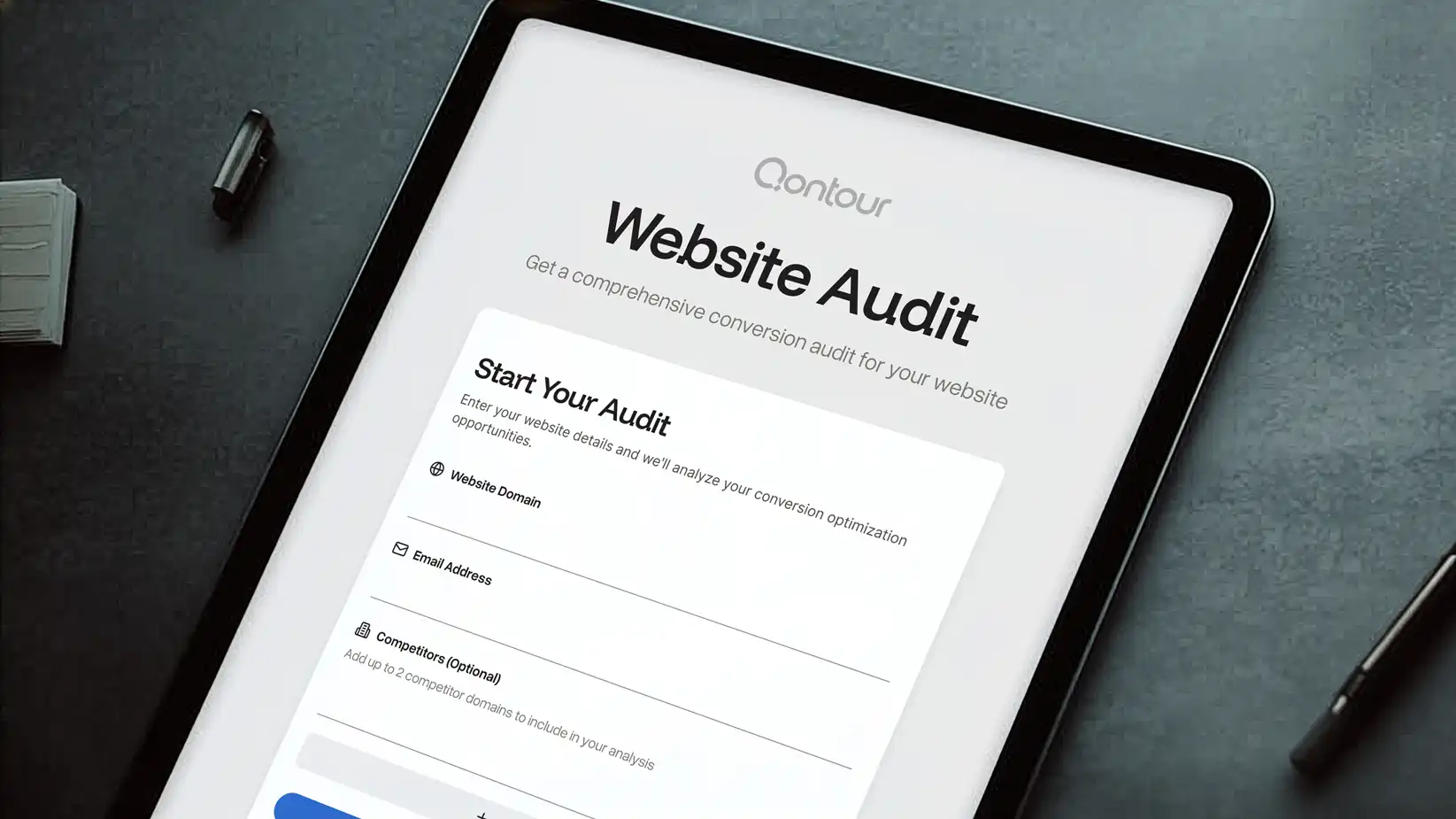
We use our CRO tool on every engagement. Figured it was only fair to let you try it without hiring us first.
The only cost is your email so we can answer any questions you have about your results.
How this process plays out
Audit & discover
We review your existing design assets, brand guidelines, and site structure. Then we map user journeys and identify where the current design is working and where it's creating friction.
Outcome:
- Design and UX audit
- User journey mapping
- Opportunity identification
Design & prototype
We build the visual system – components, page layouts, and responsive frameworks. Designs are reviewed side by side in Figma so layout and hierarchy are validated before development begins.
Outcome:
- Component library design
- Page layouts and prototypes
- Responsive framework
Refine & hand off
We refine based on feedback, finalize specifications, and hand off to development with clean documentation. Your team inherits a system that lets them build new pages from existing components. No dependency on us, and no rebuilding from scratch.
Outcome:
- Final design specifications
- Developer handoff documentation
- Design system maintenance guide
What to expect
The design system has a defined scope but it's architected for growth. Your team can add new components and page types without reworking what's already in place.
What's included
- Design and UX audit
- Component library and design system
- Wireframes and interactive prototypes
- Page design and layout specifications
- Responsive design across all breakpoints
- WCAG accessibility compliance
What's not
- Brand identity, positioning, or brand guidelines (see creative strategy and brand)
- Webflow development and site build (see website development and maintenance)
- Content creation or messaging (see editorial strategy and messaging)
Is this service the right choice?
Best for companies whose brand exists but doesn't have a system behind it – or whose current site doesn't reflect the quality of their product. Start here if your pages feel inconsistent or your team rebuilds things from scratch every time. Pairs well with website development and maintenance for the build and creative strategy and brand if the brand foundation needs work first.
Our track record
Specifics. Because the work speaks louder than the pitch.


How we help at your stage
Our plans map to where you are – startup, growth, or enterprise. Read what a typical engagement looks like and what's included at each tier.

Questions?
Queries?
Creative strategy defines your brand – positioning, identity, visual direction. This service turns those decisions into a working system. Components, page templates, responsive frameworks, and design specifications that your team uses daily. One decides what the brand looks like. The other makes sure it works that way everywhere.
They help, but they're not required. If guidelines exist, we design from them. If they don't, we can work with creative strategy and brand to build the foundation first, or establish enough visual direction within this engagement to move forward.
Yes. We'll audit what's there and build on it. If the system is solid, we extend it. If it's not holding up, we'll tell you what needs rebuilding and why.
It's built into the design process from the start. We design to WCAG standards – proper contrast ratios, touch targets, focus states, and semantic structure are part of every component and page we deliver.
Need a little more explanation?
That’s what we do.
In the meantime – we built a free site diagnostic we're really proud of. We already have your email so you won't have to give us something we don't already have